
Sugerencias
Idioma
Guía para autores
Buscador
Información de la revista
Vol. 224. Núm. 9.
Páginas 553-626 (Noviembre 2024)
Cita
Cita
Compartir
Descargar PDF
Más opciones de artículo
Visitas
931
Vol. 224. Núm. 9.
Páginas 553-626 (Noviembre 2024)
Original

Retraso diagnóstico y oportunidades perdidas en la detección precoz de la fibrilación auricular: estudio transversal

Delayed diagnosis and missed opportunities in the early detection of atrial fibrillation: a cross-sectional study
Visitas
931
F. Richard Espigaa,
Autor para correspondencia
frichardespiga@gmail.com

Autor de correspondencia.
, M. Almendro Deliab, F. Caballero Martínezc, D. Monge Martínd, F. Neria Serranoe, R. Quirós Lópezf
a Servicio de Urgencias Hospital Universitario de Burgos, Burgos, España
b Unidad de Investigación Cardiovascular y Ensayos Clínicos, Hospital Universitario Virgen Macarena, Sevilla, España
c Decano Facultad de Medicina, Universidad Francisco de Vitoria, Madrid, España
d Vicedecana de Investigación, Facultad de Medicina, Universidad Francisco de Vitoria, Madrid, España
e Unidad de apoyo a la investigación, Facultad de Medicina, Universidad Francisco de Vitoria, Madrid, España
f Servicio de Medicina Interna, Hospital Costa del Sol de Marbella, Málaga, España
Este artículo ha recibido
Información del artículo
Resumen
Texto completo
Bibliografía
Descargar PDF
Estadísticas
Resumen
Introducción

Analizamos la frecuencia y los factores asociados al retraso en el diagnóstico de la fibrilación auricular (FA) en pacientes recientemente diagnosticados.

Métodos

Estudio descriptivo, transversal, multicéntrico. Se recopilaron datos de pacientes recién diagnosticados con FA mediante entrevistas y revisión de historias clínicas en consultas de cardiología clínica, medicina interna, atención primaria y servicios de urgencias en España.

Resultados

Un total de 201 médicos participaron en el estudio (64,2% cardiólogos, 21,4% internistas). Se incluyeron 948 pacientes (58% hombres; edad media 72,8 años). En el 41,8% de pacientes, la FA se catalogó como paroxística en el momento del diagnóstico, el 30,9% como persistente y el 27,3% como permanente. El diagnóstico fue casual en el 37%. En el 49,3% de los pacientes se consideró que se había producido un retraso en el diagnóstico. El retraso se asoció a la presencia de FA permanente o persistente, mayor edad o enfermedad valvular. El 74,8% de los pacientes había tenido algún contacto con el sistema sanitario en al año previo. Se podía haber adelantado el diagnóstico entre 1-6 meses en el 50,7% de los casos y más de seis meses en el 20,1%. El 54,4% de los pacientes había experimentado sintomatología previa compatible. De ellos, el 32,6% había consultado previamente, sin que se llegara al diagnóstico.

Conclusiones

En una proporción significativa de casos de FA hay un retraso diagnóstico. Muchas personas con síntomas compatibles no acuden a consulta o tienen contactos con el sistema sanitario en los que se pierde la oportunidad de un diagnóstico temprano.

Palabras clave:
Fibrilación auricular
Diagnóstico
Diagnóstico tardío
Programas de detección diagnóstica
Cribado masivo
Abstract
Introduction

We analysed the frequency of atrial fibrillation (AF) delayed diagnosis and the factors associated with it in newly diagnosed patients.

Methods

This was a descriptive, cross-sectional, multicentre study. Data were collected from newly diagnosed patients with AF through medical records review and interviews during cardiology, internal medicine, primary care and emergency department consultations in Spain.

Results

A total of 201 physicians participated in the study (64.2% cardiologists, 21.4% internists). 948 patients (58% men; mean age 72.8 years) were included. In 41.8% of patients, AF was classified as paroxysmal at diagnosis, 30.9% as persistent and 27.3% as permanent. The diagnosis was coincidental in 37%. It was considered that a delayed diagnosis occurred in 49.3% of patients. This delay was associated with the presence of permanent or persistent AF, older age or valvular disease. 74.8% of patients had some contact with the healthcare system in the preceding year. The diagnosis could have been established between 1-6 months earlier in 50.7% of cases and more than six months earlier in 20.1%. 54.4% of the patients had experienced AF compatible symptomatology previously. Of these, 32.6% had a consultation without a diagnosis.

Conclusions

In a significant proportion of AF cases, there is a diagnostic delay. Many people with compatible symptoms neither seek consultations nor contact the healthcare system facilities. Consequently, the opportunity for early diagnosis is lost.

Keywords:
Atrial Fibrillation
Diagnosis
Delayed Diagnosis
Diagnostic Screening Programs
Mass Screening

Artículo

Opciones para acceder a los textos completos de la publicación Revista Clínica Española
Socio
Si es usted socio de FESEMI siga los siguientes pasos:

Diríjase desde aquí a la web de la >>>https://www.fesemi.org/publicaciones/revista-clinica/noticias<<< e inicie sesión mediante el formulario que se encuentra en la barra superior, pulsando sobre el candado.

Deslice el cursor hacia abajo hasta la sección "PUBLICACIONES" y pinche en "Revista Clínica Española":
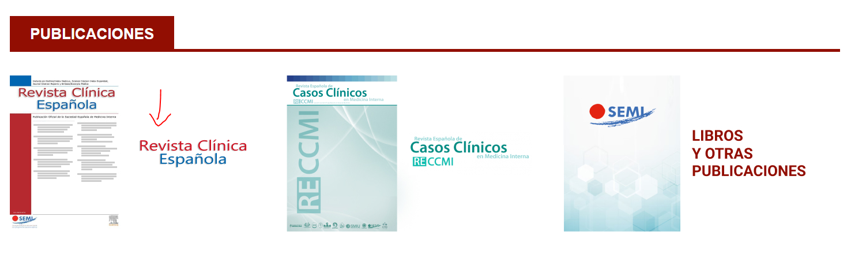
>>>https://www.fesemi.org/publicaciones/revista-clinica/noticias<<<


Suscriptor
Suscriptor de la revista

Si ya tiene sus datos de acceso, clique aquí.

Si olvidó su clave de acceso puede recuperarla clicando aquí y seleccionando la opción "He olvidado mi contraseña".
Suscribirse
Suscribirse a:
Revista Clínica Española
Comprar
Comprar acceso al artículo

Comprando el artículo el PDF del mismo podrá ser descargado

Comprar ahora
Contactar
Teléfono para suscripciones e incidencias
De lunes a viernes de 9h a 18h (GMT+1) excepto los meses de julio y agosto que será de 9 a 15h
Llamadas desde España
932 415 960
Llamadas desde fuera de España
+34 932 415 960
Email
Referencias
[1]
G. Lippi, F. Sanchis-Gomar, G. Cervellin.
Global epidemiology of atrial fibrillation: An increasing epidemic and public health challenge.
Int J Stroke., 16 (2021), pp. 217-221
[2]
F. Rahman, G.F. Kwan, E.J. Benjamin.
Global epidemiology of atrial fibrillation.
Nat Rev Cardiol., 11 (2014), pp. 639-654
[3]
G. Hindricks, T. Potpara, N. Dagres, E. Arbelo, J.J. Bax, C. Blomström-Lundqvist, et al.
2020 ESC Guidelines for the diagnosis and management of atrial fibrillation developed in collaboration with the European Association for Cardio-Thoracic Surgery (EACTS): The Task Force for the diagnosis and management of atrial fibrillation of the European Society of Cardiology (ESC) Developed with the special contribution of the European Heart Rhythm Association (EHRA) of the ESC.
Eur Heart J., 42 (2021), pp. 373-498
[4]
S. Khurshid, J.S. Healey, W.F. McIntyre, S.A. Lubitz.
Population-Based Screening for Atrial Fibrillation.
Circ Res., 127 (2020), pp. 143-154
[5]
C.T. January, L.S. Wann, H. Calkins, L.Y. Chen, J.E. Cigarroa, J.C. Cleveland Jr., et al.
2019 AHA/ACC/HRS Focused Update of the 2014 AHA/ACC/HRS Guideline for the Management of Patients With Atrial Fibrillation: A Report of the American College of Cardiology/American Heart Association Task Force on Clinical Practice Guidelines and the Heart Rhythm Society in Collaboration With the Society of Thoracic Surgeons.
Circulation., 140 (2019), pp. e125-e151
[6]
M.P. Turakhia, J. Shafrin, K. Bognar, J. Trocio, Y. Abdulsattar, D. Wiederkehr, et al.
Estimated prevalence of undiagnosed atrial fibrillation in the United States.
PLoS One., 13 (2018), pp. e0195088
[7]
J.L. Clua-Espuny, I. Lechuga-Duran, R. Bosch-Princep, A. Roso-Llorach, A. Panisello-Tafalla, J. Lucas-Noll, et al.
Prevalence of undiagnosed atrial fibrillation and of that not being treated with anticoagulant drugs: the AFABE study.
Rev Esp Cardiol (Engl Ed)., 66 (2013), pp. 545-552
[8]
N. Claes, C. Van Laethem, M. Goethals, P. Goethals, G. Mairesse, B. Schwagten, et al.
Prevalence of atrial fibrillation in adults participating in a large-scale voluntary screening programme in Belgium.
Acta Cardiol., 67 (2012), pp. 273-278
[9]
P.J. McCabe, A.M. Chamberlain, L. Rhudy, H.A. DeVon.
Symptom Representation and Treatment-Seeking Prior to Diagnosis of Atrial Fibrillation.
West J Nurs Res., 38 (2016), pp. 200-215
[10]
WMA - The World Medical Association. Declaración de Helsinki de la AMM – Principios éticos para las investigaciones médicas en seres humanos [Internet]. [consultado 24 Ene 2024]. Disponible en: https://www.wma.net/es/policies-post/declaracion-de-helsinki-de-la-amm-principios-eticos-para-las-investigaciones-medicas-en-seres-humanos/.
[11]
International guidelines for ethical review of epidemiological studies.
Law Med Health Care., 19 (1991), pp. 247-258
[12]
P.A. Wolf, R.D. Abbott, W.B. Kannel.
Atrial fibrillation as an independent risk factor for stroke: the Framingham Study.
Stroke., 22 (1991), pp. 983-988
[13]
E.J. Benjamin, P.A. Wolf, R.B. D’Agostino, H. Silbershatz, W.B. Kannel, D. Levy.
Impact of atrial fibrillation on the risk of death: the Framingham Heart Study.
Circulation., 98 (1998), pp. 946-952
[14]
D.J. Gladstone, R. Wachter, K. Schmalstieg-Bahr, F.R. Quinn, E. Hummers, N. Ivers, et al.
Screening for Atrial Fibrillation in the Older Population: A Randomized Clinical Trial.
JAMA Cardiol., 6 (2021), pp. 558-567
[15]
R.E. Wilson, K.L. Rush, L. Hatt, R.C. Reid, C.G. Laberge.
The Symptom Experience of Patients With Atrial Fibrillation Before Their Initial Diagnosis.
J Cardiovasc Nurs., 35 (2020), pp. 347-357
[16]
P.J. McCabe, L.M. Rhudy, A.M. Chamberlain, H.A. DeVon.
Fatigue, dyspnea, and intermittent symptoms are associated with treatment-seeking delay for symptoms of atrial fibrillation before diagnosis.
Eur J Cardiovasc Nurs., 15 (2016), pp. 459-468
[17]
S.P. Ponamgi, K.C. Siontis, D.R. Rushlow, J. Graff-Radford, V. Montori, P.A. Noseworthy.
Screening and management of atrial fibrillation in primary care.
BMJ, 373 (2021), pp. n379
[18]
US Preventive Services Task Force, K.W. Davidson, M.J. Barry, C.M. Mangione, M. Cabana, A.B. Caughey, et al.
Screening for Atrial Fibrillation: US Preventive Services Task Force Recommendation Statement.
JAMA., 327 (2022), pp. 360-367
[19]
J.C. Nielsen, Y.J. Lin, M.J. De Oliveira Figueiredo, A. Sepehri Shamloo, A. Alfie, S. Boveda, et al.
European Heart Rhythm Association (EHRA)/Heart Rhythm Society (HRS)/Asia Pacific Heart Rhythm Society (APHRS)/Latin American Heart Rhythm Society (LAHRS) expert consensus on risk assessment in cardiac arrhythmias: use the right tool for the right outcome, in the right population.
Europace., 22 (2020), pp. 1147-1148
[20]
N. Lowres, L. Neubeck, J. Redfern, S.B. Freedman.
Screening to identify unknown atrial fibrillation. A systematic review.
Thromb Haemost., 110 (2013), pp. 213-222
Idiomas
Revista Clínica Española
Opciones de artículo
Herramientas
Material suplementario