Sugerencias
Idioma
Guía para autores
Buscador
Información de la revista
Vol. 223. Núm. 8.
Páginas 461-522 (Octubre 2023)
Cita
Cita
Compartir
Descargar PDF
Más opciones de artículo
Visitas
1130
Vol. 223. Núm. 8.
Páginas 461-522 (Octubre 2023)
Special article

Imported and autochthonous dengue in Spain

Dengue importado y autóctono en España
Visitas
1130
J.-M. Herrero-Martíneza,1, M. Sánchez-Ledesmab,1, J.-M. Ramos-Rincónc,
Autor para correspondencia
jose.ramosr@umh.es

Corresponding author.
a Servicio de Medicina Interna, Hospital Universitario 12 de Octubre-Imas12, Madrid, Dpto. de Medicina, Universidad Complutense de Madrid, Madrid, Spain
b Unidad Enfermedades Infecciosas, Servicio de Medicina Interna, Hospital Universitario de Salamanca- IBSAL, Salamanca, Dpto. de Medicina, Universidad de Salamanca, IBSAL, Salamanca, Spain
c Servicio de Medicina Interna, Hospital General Universitario Dr. Balmis; Dpto de Medicina Clínica Universidad Miguel Hernández; Instituto de Investigación Sanitaria y Biomédica de Alicante (ISABIAL), Alicante, España
Este artículo ha recibido
Información del artículo
Resumen
Texto completo
Bibliografía
Descargar PDF
Estadísticas
Abstract

Dengue is globally the most important arboviral infection. It is caused by the dengue virus and it is generally transmitted by Aedes mosquitoes’ bites (Ae aegypti or Ae albopictus). In Spain it was initially eradicated in the 20th century, together with the Ae aegypti vector, and currently most of the cases reported in Spain are imported by travelers from countries with dengue transmission (imported dengue). However, in recent years, cases of dengue have been described in people residing in Spain who had not traveled to areas with known transmission (autochthonous dengue), transmitted by Aedes albopictus (the so-called tiger mosquito), present especially in the Mediterranean basin. Therefore, a good knowledge of this potentially severe disease is required, so that it can be diagnosed early, and managed correctly, thus reducing its mortality, as well as its eventual autochthonous transmission.

Keywords:
Dengue
Epidemiology
Clinical manifestations
Diagnosis
Imported dengue
Autochthonous dengue
Resumen

El dengue es, globalmente, la arbovirosis más importante. Está causado por el virus del dengue y transmitido generalmente por la picadura de mosquitos del género Aedes (Ae aegypti o Ae albopictus). En España fue inicialmente erradicado en el siglo XX, junto con el vector Ae aegypti, y en la actualidad la mayoría de los casos notificados en España son importados por viajeros procedentes de países con transmisión de dengue (dengue importado). Sin embargo, en los últimos años se han descrito casos de dengue de personas residentes en España que no habían viajado a zonas con transmisión conocida del virus (dengue autóctono), transmitidos por Aedes albopictus (el denominado mosquito tigre), presente especialmente en la cuenca mediterránea. Se requiere por lo tanto un buen conocimiento de esta enfermedad, ya que puede dar lugar a cuadros clínicos graves, de modo que pueda ser diagnosticada precozmente, y manejada correctamente, disminuyendo con ello su mortalidad, así como su eventual transmisión autóctona.

Palabras clave:
Dengue
Epidemiología
Manifestaciones clínicas
Diagnóstico
Dengue importado
Dengue autóctono

Artículo

Opciones para acceder a los textos completos de la publicación Revista Clínica Española
Socio
Si es usted socio de FESEMI siga los siguientes pasos:

Diríjase desde aquí a la web de la >>>https://www.fesemi.org/publicaciones/revista-clinica/noticias<<< e inicie sesión mediante el formulario que se encuentra en la barra superior, pulsando sobre el candado.
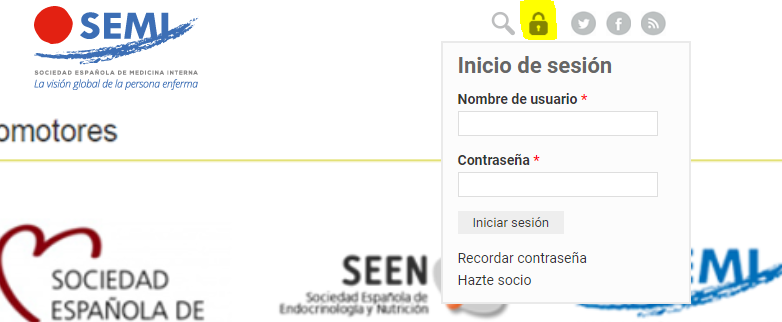
Deslice el cursor hacia abajo hasta la sección "PUBLICACIONES" y pinche en "Revista Clínica Española":

>>>https://www.fesemi.org/publicaciones/revista-clinica/noticias<<<


Suscriptor
Suscriptor de la revista

Si ya tiene sus datos de acceso, clique aquí.

Si olvidó su clave de acceso puede recuperarla clicando aquí y seleccionando la opción "He olvidado mi contraseña".
Suscribirse
Suscribirse a:
Revista Clínica Española
Comprar
Comprar acceso al artículo

Comprando el artículo el PDF del mismo podrá ser descargado

Comprar ahora
Contactar
Teléfono para suscripciones e incidencias
De lunes a viernes de 9h a 18h (GMT+1) excepto los meses de julio y agosto que será de 9 a 15h
Llamadas desde España
932 415 960
Llamadas desde fuera de España
+34 932 415 960
Email
References
[1]
M. Díaz-Menéndez, K.M. Angelo, R. Miguel Buckley, E. Bottieau, R. Huits, M.P. Grobusch, et al.
Dengue outbreak among travellers returning from Cuba-GeoSentinel surveillance network, January-September 2022.
J Travel Med, 30 (2023), pp. taac139
[2]
M.G. Guzman, E. Harris.
Dengue.
[3]
P.D.N. Sirisena, S. Mahilkar, C. Sharma, J. Jain, S. Sunil.
Concurrent dengue infections: Epidemiology and clinical implications.
Indian J Med Res, 154 (2021), pp. 669-679
[4]
J.C. Semenza, J. Rocklöv, K.L. Ebi.
Climate change and cascading risks from infectious disease.
Infect Dis Ther, 11 (2022), pp. 1371-1390
[5]
D.M. Salgado, J.A. Rodríguez, L.P. Lozano, T.E. Zabaleta.
Perinatal dengue.
Biomedica, 33 (2013), pp. 14-21
[6]
WHO. Dengue and severe dengue. Available from: https://www.who.int/news-room/fact-sheets/detail/dengue-and-severe-dengue [Accessed 02 April 2023].
[7]
L.L.M. Santos, E.C. de Aquino, S.M. Fernandes, Y.M.F. Ternes, V.C.R. Feres.
Dengue, chikungunya, and Zika virus infections in Latin America and the Caribbean: a systematic review.
Rev Panam Salud Publica, 47 (2023), pp. e34
[8]
C.M. Gossner, N. Fournet, C. Frank, B. Fernández-Martínez, M. Del Manso, J. Gomes Dias, et al.
Dengue virus infections among European travellers, 2015 to 2019.
Euro Surveill, 27 (2022),
[9]
Informe epidemiológico sobre la situación de dengue en España. Años 2019, 2020 y 2021. Centro Nacional de Epidemiología. Instituto de Salud Carlos III. Madrid, 14 noviembre 2022. Available from: https://www.isciii.es/QueHacemos/Servicios/VigilanciaSaludPublicaRENAVE/EnfermedadesTransmisibles/Documents/archivos%20A-Z/Dengue/INFORME_RENAVE_DENGUE%202019-2021.pdf.
[10]
UNWTO World Tourism Barometer. Available from: https://www.e-unwto.org/loi/wtobarometeresp [Accessed 02 April 2023].
[11]
Boletín Semanal en Red. Número 40. Año 2022. Centro Nacional de Epidemiología. ISCIII. Resumen de los casos notificados a la Red Nacional de Vigilancia Epidemiológica. Temporada 2022. Available from: https://www.isciii.es/QueHacemos/Servicios/VigilanciaSaludPublicaRENAVE/EnfermedadesTransmisibles/Boletines/Paginas/BoletinSemanalEnRed.aspx.
[12]
Centro Coordinador de Alertas y Emergencias. Ministerio de sanidad, Consumo y Bienestar Social. Primeros casos de dengue autóctono en España. Evaluación rápida de Riesgo. Actualización noviembre 2018. Available from: https://www.sanidad.gob.es/profesionales/saludPublica/ccayes/analisisituacion/doc/ERR_Dengue_autoctono_Espana_23.11.2018.pdf.
[13]
Centro Coordinador de Alertas y Emergencias.
Ministerio de sanidad, Consumo y Bienestar Social. Evaluación rápida de Riesgo. Dengue autóctono en España, 2a actualización.
[14]
Centro Coordinador de Alertas y Emergencias.
Ministerio de sanidad, Consumo y Bienestar Social. Evaluación Rápida de Riesgo. Transmisión sexual del virus dengue en España [Internet].
[15]
Centro Coordinador de Alertas y Emergencias.
Ministerio de sanidad, Consumo y Bienestar Social. Evaluación Rápida de Riesgo. Agrupación de casos de dengue autóctono en Ibiza. [Internet].
[16]
C. Aranda, R. Eritja, D. Roiz.
First record and establishment of the mosquito Aedes albopictus in Spain.
Med Vet Entomol, 20 (2006), pp. 150-152
[17]
Ministerio de Sanidad. Vigilancia entomológica: Resultados 2021 [Internet]. Available from: https://www.sanidad.gob.es/profesionales/saludPublica/ccayes/activPreparacionRespuesta/doc/Informe_PlanVectores_2021.pdf.
[18]
M. Brustolin, C. Santamaria, S. Napp, M. Verdún, R. Rivas, N. Pujol, et al.
Experimental study of the susceptibility of a European Aedes albopictus strain to dengue virus under a simulated Mediterranean temperature regime.
Med Vet Entomol, 32 (2018), pp. 393-398
[19]
S.A. Kularatne.
Dengue fever.
BMJ, 351 (2015), pp. h4661
[20]
S.J. Thomas, A.L. Rothman, A. Srikiatkhachorn, S. Kalayanarooj.
Dengue virus infection.
Clinical manifestation and diagnosis,
[21]
World Health Organization. Dengue haemorrhagic fever: diagnosis, treatment, prevention and control. 2nd edition. Geneva 1997. https://apps.who.int/iris/bitstream/handle/10665/41988/9241545003_eng.pdf?sequence=1&isAllowed=y.
[22]
A. Srikiatkhachorn, R.V. Gibbons, S. Green, D.H. Libraty, S.J. Thomas, T.P. Endy, et al.
Dengue hemorrhagic fever: the sensitivity and specificity of the world health organization definition for identification of severe cases of dengue in Thailand, 1994-2005.
Clin Infect Dis, 50 (2010), pp. 1135-1143
[23]
World Health Organization. Regional Office for South-East Asia. (2011). Comprehensive Guideline for Prevention and Control of Dengue and Dengue Haemorrhagic Fever. Revised and expanded edition. WHO Regional Office for South-East Asia. Available from: https://apps.who.int/iris/handle/10665/204894.
[24]
Directrices para el diagnóstico clínico y el tratamiento del dengue, el chikunguña y el zika. Edición corregida. Washington, D.C.: Organización Panamericana de la Salud; 2022. Licencia: CC BY-NC-SA 3.0 IGO. Available from: https://doi.org/10.37774/9789275324875
[25]
S. Kalayanarooj, D.W. Vaughn, S. Nimmannitya, S. Green, S. Suntayakorn, N. Kunentrasai, et al.
Early clinical and laboratory indicators of acute dengue illness.
J Infect Dis, 176 (1997), pp. 313-321
[26]
A. Srikiatkhachorn, A. Krautrachue, W. Ratanaprakarn, L. Wongtapradit, N. Nithipanya, S. Kalayanarooj, et al.
Natural history of plasma leakage in dengue hemorrhagic fever: a serial ultrasonographic study.
Pediatr Infect Dis J, 26 (2007), pp. 283-290
[27]
X.T. Cao, T.N. Ngo, B. Wills, R. Kneen, T.T. Nguyen, T.T. Ta, et al.
Evaluation of the World Health Organization standard tourniquet test and a modified tourniquet test in the diagnosis of dengue infection in Viet Nam.
Trop Med Int Health, 7 (2002), pp. 125-132
[28]
A. Díaz, G. Kourí, M.G. Guzmán, L. Lobaina, J. Bravo, A. Ruiz, et al.
Description of the clinical picture of dengue hemorrhagic fever/dengue shock syndrome (DHF/DSS) in adults.
Bull Pan Am Health Organ, 22 (1988), pp. 133-144
[29]
P.Y. Chia, T.L. Thein, S.W.X. Ong, D.C. Lye, Y.S. Leo.
Severe dengue and liver involvement: an overview and review of the literature.
Expert Rev Anti Infect Ther, 18 (2020), pp. 181-189
[30]
F.J. Carod-Artal, O. Wichmann, J. Farrar, J. Gascón.
Neurological complications of dengue virus infection.
Lancet Neurol, 12 (2013), pp. 906-919
[31]
C.H. Miranda, M.C. Borges, A.K. Matsuno, F.C. Vilar, L.G. Gali, G.J. Volpe, et al.
Evaluation of cardiac involvement during dengue viral infection.
Clin Infect Dis, 57 (2013), pp. 812-819
[32]
I.K. Lee, J.W. Liu, K.D. Yang.
Clinical characteristics, risk factors, and outcomes in adults experiencing dengue hemorrhagic fever complicated with acute renal failure.
Am J Trop Med Hyg, 80 (2009), pp. 651-655
[33]
L.H. Tan, L.C. Lum, S.F. Omar, F.K. Kan.
Hemophagocytosis in dengue: comprehensive report of six cases.
J Clin Virol, 55 (2012), pp. 79-82
[34]
E.A. Hunsperger, J. Muñoz-Jordán, M. Beltran, C. Colón, J. Carrión, J. Vazquez, et al.
Performance of dengue diagnostic tests in a single-specimen diagnostic algorithm.
J Infect Dis, 214 (2016), pp. 836-844
[35]
M.G. Guzman, T. Jaenisch, R. Gaczkowski, V.T. Ty Hang, S.D. Sekaran, A. Kroeger, et al.
Multi-country evaluation of the sensitivity and specificity of two commercially-available NS1 ELISA assays for dengue diagnosis.
PLoS Negl Trop Dis, 4 (2010), pp. e811
[36]
J.A. Potts, A.L. Rothman.
Clinical and laboratory features that distinguish dengue from other febrile illnesses in endemic populations.
Trop Med Int Health, 13 (2008), pp. 1328-1340
[37]
S.J. Thomas, A.L. Rothman, A. Srikiatkhachorn, S. Kalayanarooj.
Dengue virus: prevention and treatment,
[38]
Organización Panamericana de la Salud.
Dengue: guías para la atención de enfermos en la Región de las Américas.
2.ed., OPS, (2016),
[39]
D.C. Lye, S. Archuleta, S.F. Syed-Omar, J.G. Low, H.M. Oh, Y. Wei, et al.
Prophylactic platelet transfusion plus supportive care versus supportive care alone in adults with dengue and thrombocytopenia: a multicentre, open-label, randomised, superiority trial.
Lancet, 389 (2017), pp. 1611-1618
[40]
T.H. Lee, J.G. Wong, Y.S. Leo, T.L. Thein, E.L. Ng, L.K. Lee, et al.
Potential harm of prophylactic platelet transfusion in adult dengue patients.
PLoS Negl Trop Dis, 10 (2016),
[41]
F. Zhang, C.V. Kramer.
Corticosteroids for dengue infection.
Cochrane Database Syst Rev, 2014 (2014),
[42]
E.M. Dimaano, M. Saito, S. Honda, E.A. Miranda, M.T. Alonzo, M.D. Valerio, et al.
Lack of efficacy of high-dose intravenous immunoglobulin treatment of severe thrombocytopenia in patients with secondary dengue virus infection.
Am J Trop Med Hyg, 77 (2007), pp. 1135-1138
[43]
World Health Organization.
Weekly epidemiological record Dengue Vaccine. WHO position paper.
[44]
S.J. Thomas, A.L. Rothman.
Trials and tribulations on the path to developing a dengue vaccine.
[45]
G. Paz-Bailey, L. Adams, J.M. Wong, K.A. Poehling, W.H. Chen, V. McNally, et al.
Dengue vaccine: Recommendations of the Advisory Committee on Immunization Practices, United States, 2021.
MMWR Recomm Rep, 70 (2021), pp. 1-16
[46]
E. Plennevaux, A. Moureau, J.L. Arredondo-García, L. Villar, P. Pitisuttithum, N.H. Tran, et al.
Impact of dengue vaccination on serological diagnosis: insights from phase III dengue vaccine efficacy trials.
Clin Infect Dis, 66 (2018), pp. 1164-1172
[47]
A.R. Precioso, R. Palacios, B. Thomé, G. Mondini, P. Braga, J. Kalil.
Clinical evaluation strategies for a live attenuated tetravalent dengue vaccine.
Vaccine, 33 (2015), pp. 7121-7125
[48]
European Medicines Agency. Qdenga. Dengue tetravalent vaccine (live, attenuated). Available from: https://www.ema.europa.eu/en/medicines/human/EPAR/qdenga [Accessed 24 April 2023].
[49]
Takeda Pharmaceutical Company Limited. Takeda’s QDENGA. (Dengue Tetravalent Vaccine [Live, Attenuated]) Approved in Brazil for Use Regardless of Prior Dengue Exposure. Available from: https://www.takeda.com/newsroom/newsreleases/2023/takedas-qdenga-approved-in-brazil [Accessed 24 April 2023].
[50]
S. Biswal, H. Reynales, X. Saez-Llorens, P. Lopez, C. Borja-Tabora, P. Kosalaraksa, et al.
Efficacy of a tetravalent dengue vaccine in healthy children and adolescents.
N Engl J Med, 381 (2019), pp. 2009-2019
[51]
S. Biswal, C. Borja-Tabora, L. Martinez Vargas, H. Velásquez, M. Theresa Alera, V. Sierra, et al.
Efficacy of a tetravalent dengue vaccine in healthy children aged 4-16 years: a randomised, placebo-controlled, phase 3 trial.
Lancet, 395 (2020), pp. 1423-1433
[52]
S.S. Patel, M. Rauscher, M. Kudela, H. Pang.
Clinical safety experience of TAK-003 for dengue fever: A new tetravalent live attenuated vaccine candidate.
Clin Infect Dis, 76 (2023), pp. e1350-e1359
Idiomas
Revista Clínica Española
Opciones de artículo
Herramientas