


Follow-up within Integrated Management Units for Heart Failure (UMIPIC) in patients with multiple comorbidities discharged after heart failure (HF) improves outcomes during the acute phase. However, many Internal Medicine departments use alternative models, and it remains unclear whether these alternative approaches provide additional benefits compared to exclusive follow-up in Primary Care (PC), as well as whether hospital-based consultations maintain their impact once patient stability is achieved.
MethodsWe analyzed 709 H F discharges from the PROFUND-IC registry. After population weighting using inverse probability weighting (IPW), we assessed HF readmissions and all-cause mortality at 12 months, comparing patients followed in UMIPIC units, Internal Medicine outpatient clinics (non-UMIPIC), and exclusively in PC. Events occurring within the first 6 months after the acute phase were analyzed separately from those in the subsequent 6 months.
ResultsPatients managed under the UMIPIC models experienced a lower 12-month risk of events compared with PC (HR 0.56; 95% CI 0.38–0.84; p < 0.01) and non-UMIPIC (HR 0.58; 95% CI 0.36–0.93; p = 0.02); the latter showed no benefit over PC. Event reduction in UMIPIC was significant during the first 6 months (HR 0.56; 95% CI 0.38–0.83; p < 0.01), with no differences between models during the stable phase.
Conclusions. Hospital-based follow-up of patients with multiple comorbidities during the first six months after an HF episode reduces HF readmissions and overall mortality compared with exclusive PC follow-up—provided it is conducted under the UMIPIC model rather than through conventional Internal Medicine consultations.
El seguimiento de pacientes pluripatológicos dados de alta por insuficiencia cardiaca (IC) mediante el modelo de las Unidades de Manejo Integral en pacientes con IC (UMIPIC) ha demostrado mejorar el pronóstico. Sin embargo, numerosos servicios de Medicina Interna utilizan otros modelos, desconociéndose si aportan beneficios adicionales frente al seguimiento exclusivo en atención primaria (AP), así como si las consultas hospitalarias mantienen su impacto una vez alcanzada la estabilidad del paciente.
MétodosSe analizaron 709 altas hospitalarias por IC procedentes del registro PROFUND-IC. Tras ponderación de poblaciones mediante Inverse Probability Weighting (IPW), se evaluaron los reingresos por IC y mortalidad por cualquier las causas a 12 meses, comparando pacientes seguidos en UMIPIC, consultas de Medicina interna y exclusivamente en AP. Se analizan separadamente los eventos ocurridos en los 6 primeros meses tras fase aguda de los 6 siguientes.
ResultadosLos pacientes gestionados en UMIPIC presentaron menor riesgo de eventos a 12 meses tanto frente a AP (HR 0,56; IC95% 0,38–0,84; p < 0,01) y frente a no-UMIPIC (HR 0,58 IC95% 0,36-0,93, p = 0,02); estos últimos no presentaron beneficios frente a AP. La reducción de eventos en UMIPIC fue significativa en los primeros 6 meses (HR 0,56; IC95% 0,38–0,83; p < 0,01), sin diferencias entre modelos en fase estable.
ConclusionesEl seguimiento hospitalario de pacientes pluripatológicos durante los primeros 6 meses tras un episodio de IC reduce los reingresos y la mortalidad en comparación con el seguimiento en AP, siempre que se realice bajo el modelo UMIPIC y no mediante consultas convencionales.
Article
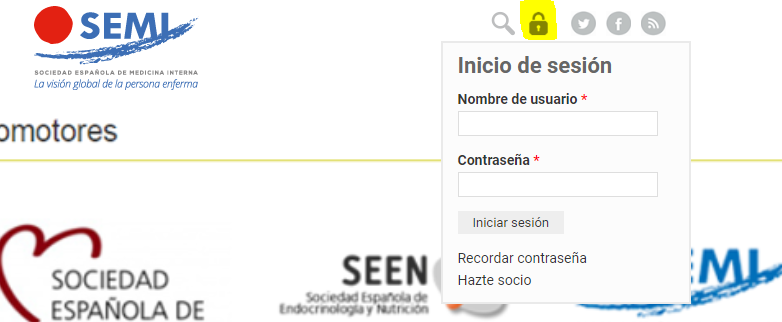
Diríjase desde aquí a la web de la >>>FESEMI<<< e inicie sesión mediante el formulario que se encuentra en la barra superior, pulsando sobre el candado.
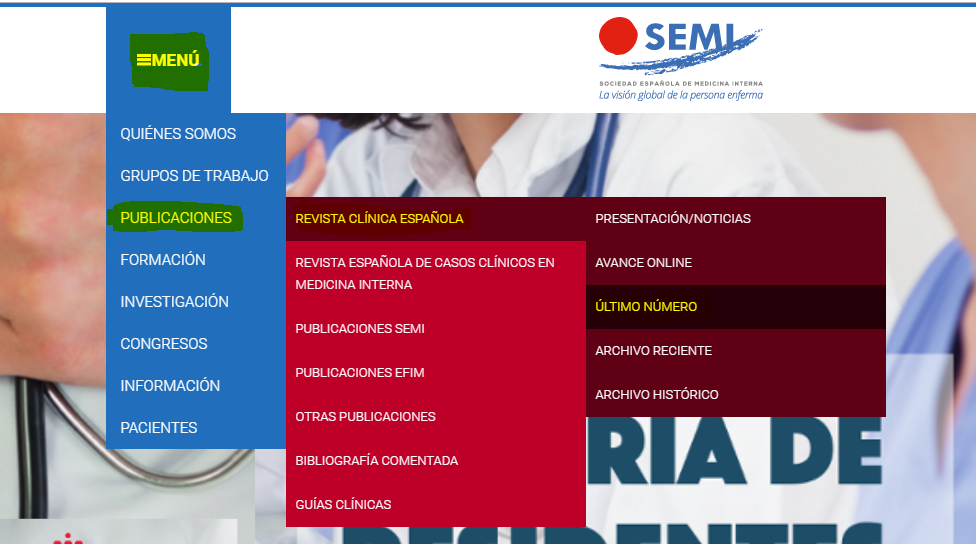
Una vez autentificado, en la misma web de FESEMI, en el menú superior, elija la opción deseada.
>>>FESEMI<<<