


We evaluated the impact of a specialized unit on reducing heart failure (HF) readmissions in elderly patients with multiple comorbidities and HFrEF (LVEF < 40%) or mildly reduced EF (LVEF 40–50%), considering different levels of pharmacological optimization.
MethodsRetrospective analysis of a cohort of 135 patients. Readmission rates and their association with optimized treatment were analyzed.
ResultsHF admissions decreased by 51% compared to the previous year (p = 0.013). Sixty percent received quadruple therapy, and 62–71% at least three drugs. NT-proBNP levels dropped by 70% (p < 0.001). Quadruple therapy was associated with fewer readmissions at 12 months (p = 0.036), as were ARNI + BB + MRA (p = 0.016) and MRA monotherapy (p = 0.012). The median time to achieve therapeutic optimization was 52 days (27–82 days).
ConclusionsA specialized unit markedly improves therapeutic optimization and reduces readmissions in these patients.
Se evalúa el impacto de una unidad especializada sobre la reducción de reingresos por IC, en pacientes ancianos pluripatológicos con IC-FEr (FEVi <40%) o ligeramente reducida (FEVi 40–50 %), considerando distintos niveles de optimización farmacológica.
MétodoAnálisis retrospectivo de una cohorte de 135 pacientes. Se analizaron las tasas de reingreso y la asociación con el tratamiento optimizado.
ResultadosLos ingresos por IC se redujeron un 51% respecto al año previo (p = 0,013). El 60 % recibió terapia cuádruple y el 62–71% al menos tres fármacos. El NT-proBNP disminuyó un 70 % (p < 0,001). La terapia cuádruple se asoció con menos reingresos al año (p = 0,036), al igual que ARNI + BB + ARM (p = 0,016) y ARM en monoterapia (p = 0,012). La mediana del tiempo hasta alcanzar la optimización terapéutica fue de 52 (27–82) días.
ConclusionUna unidad especializada mejora notablemente la optimización terapéutica y reduce reingresos en este perfil de pacientes.

Article
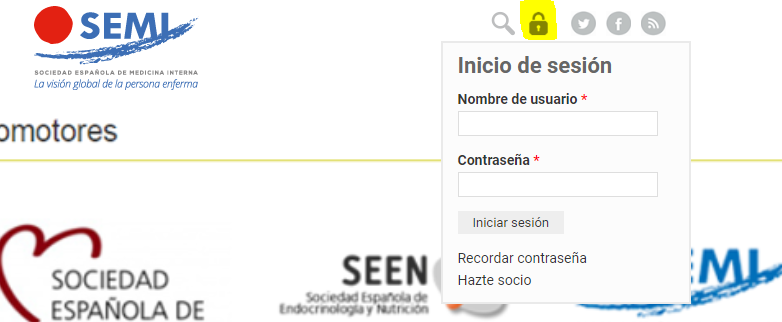
Diríjase desde aquí a la web de la >>>FESEMI<<< e inicie sesión mediante el formulario que se encuentra en la barra superior, pulsando sobre el candado.
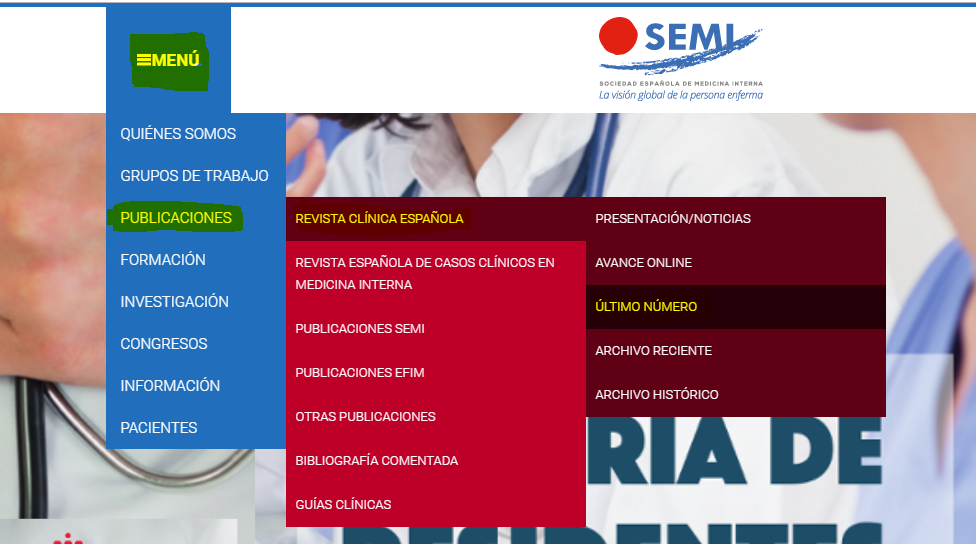
Una vez autentificado, en la misma web de FESEMI, en el menú superior, elija la opción deseada.
>>>FESEMI<<<