




Simulated clinical scenarios allow students to learn in a safe environment. Although it is recommended that standardized patients (SP) participate in these scenarios, few studies compare the impact of SP and real patients (RP) on medical education.
MethodsForty medical students per course (4th, 5th, and 6th) were selected and randomly assigned (1:1) to two groups: a scenario with RP or SP. The students and the external observer were unaware of the type of patient participating in the scenario. The students completed questionnaires on perceptions and knowledge, and the responsible professors and external observer completed questionnaires on perceptions. Qualitative information was collected through focus groups with the students.
ResultsNo significant differences were found between both groups in perceptions and acquired knowledge, but there was a significant difference in the probability of correctly identifying the type of patient (p < 0.001): most students in the scenario with SP identified it as RP. No differences were found between groups in the professor and external observer questionnaires. Students were more prepared and involved if they believed they were facing a RP and considered the patient's feedback enriching, regardless of the type of patient.
ConclusionsMedical students do not differentiate SP from RP in scenarios and evaluate them similarly. Given the difficulty of having PR with diverse pathologies and severity levels, SP is a good alternative for training medical students.
Los escenarios clínicos simulados permiten a los estudiantes aprender en un entorno seguro. Aunque se recomienda la participación de pacientes estandarizados (PE) en estos escenarios, existen pocos estudios que comparen el impacto en la educación médica, entre PE y pacientes reales (PR).
MétodosSe seleccionaron 40 estudiantes de medicina por curso (4º, 5º y 6º) y se asignaron aleatoriamente (1:1) a dos grupos, escenario con PR o PE. Los estudiantes y el observador externo desconocían el tipo de paciente que participaba en el escenario. Los estudiantes completaron cuestionarios de sensaciones y conocimientos, y los profesores responsables y observador externo, cuestionarios de sensaciones. La información cualitativa se recogió mediante grupos focales con los estudiantes.
ResultadosNo se encontraron diferencias significativas entre ambos grupos en las sensaciones percibidas ni en los conocimientos adquiridos, pero sí en la probabilidad de identificar correctamente el tipo de paciente (p < 0,001). La mayoría de los estudiantes del escenario con PE lo identificaron como PR. Tampoco se encontraron diferencias entre grupos, en los cuestionarios completados por profesores y observador externo. Los estudiantes se preparan e involucran más si creen estar ante un PR y consideran que el feedback del paciente es enriquecedor, independientemente del tipo de paciente.
ConclusionesLos estudiantes de medicina no diferencian a los PE de los PR en los escenarios, y los evalúan de manera similar. Ante la dificultad de disponer de PR, con diversas patologías y niveles de gravedad, el PE es una buena alternativa para la formación de los estudiantes de medicina.
Simulations integrated into an undergraduate medical degree education are an essential tool for training students.1 Participation in simulated clinical scenarios allows students to learn in a safe, controlled, and standardized environment with a realistic approximation to real practice.2 In point 4.5 of Order 81/2017, the Spanish Ministry of Health recommends the use of standardized patients (SP) in the training of health sciences students.3 Scenarios with SP recreate clinical situations in order for students to interact with patients and practice clinical and non-clinical skills. SPs represents the totality of the patient they simulate: his or her story, body language, physical signs, and emotional and personality traits.4,5 This makes SPs a suitable tool for the training and evaluation of medical students.6,7
Simulation scenarios form part of the University of Navarre School of Medicine curriculum since students’ initial years of study, but with more complex scenarios during their 4th, 5th, and 6th years. They are associated with the subjects taken in the corresponding year. Eight to ten students per group participate in the scenarios, which follow a classic structure with a briefing, the scenario, and a debriefing. Students know in advance that they are facing an SP and the specialty of the scenario, although they do not know the specific disease portrayed in the case. Although numerous studies support the benefits of incorporating SP scenarios into undergraduate medical education,5,6,8–10 there are few that compare the impact on medical education of SPs versus real patients (RP). Most of the articles are descriptive in nature, do not have a comparison group, have a small sample size,8 or are not blinded,11–13 which limits their external validity. In light of the above, this work aims to validate scenarios with SPs at our center and to assess whether there are differences in teaching based on simulated scenarios either SPs or RPs.
Material and methodsDesignThis study is a randomized, controlled, blinded intervention conducted with students in their 4th, 5th, and 6th year of study at the University of Navarre School of Medicine during the 2020–2021 academic year. Four workshops were held in each course: two with RPs and two with SPs. All scenarios took place at the simulation center of the University of Navarre School of Medicine.
Sample selectionAll students in each course were potentially eligible. A randomly ordered list was created and students were invited to participate in the project sequentially until 40 students per year were reached. The invitation was sent by email and included the information sheet and the informed consent form. The students did not receive any type of remuneration.
InterventionThe 40 students selected from each year were randomly assigned to one of the two possible scenarios in a 1:1 ratio. In each year, there was only one RP and one SP.
All workshops were recorded and viewed later by an external observer (physician and expert on medical simulation). Both the students and the external observer were unaware of the type of patient participating in the scenario (double blind).
The cases in the scenarios were: in 4th year, an otorhinolaryngology case: first consultation for nasal obstruction; in 5th year, a gastrointestinal case: follow-up consultation with a patient with ulcerative colitis; and in 6th year, a primary care case: follow-up consultation with a chronic patient with metabolic syndrome. The SPs had previous experience in medical simulation scenarios. Each received a one-hour case and feedback training session by an instructor on simulations. The SPs were of a similar age to the RPs, in 4th year: 20 years old; in 5th year: 63 years old; and in 6th year: 69 years old. The workshops followed the same structure as the workshops held in the undergraduate degree in medicine: briefing, scenario, and debriefing. Of the ten students who participated in each workshop, only one entered the scenario. His or her peers and the teacher in charge of the workshop watched his or her performance live on a monitor in an adjacent room.
Information gatheringQuantitative informationAfter the workshop, the students completed two questionnaires: one with questions about their perceptions during participation in the workshop (perceptions questionnaire) and another with questions on knowledge to assess the achievement of learning objectives (knowledge questionnaire). The teacher in charge of the workshop and the external observer also completed perceptions questionnaires.
The perceptions questionnaire included the same questions for students, supervisors, and the external observer with some variations. For the students, there were 27 questions on the briefing (question 1), patient authenticity (questions 2–8), patient attitude (questions 9, 10), debriefing (feedback) (questions 11–17), learning (questions 18–24), and motivation and impact (questions 25–27). For the teachers and external observers, there were 16 and 15 questions, respectively.
The responses were collected using a Likert scale that indicated the degree of agreement from 1 to 4 (1 = strongly disagree, 4 = strongly agree). In addition, one question was included (question 28 for students, question 17 for the teacher, and question 16 for the external observer) in which the activity was evaluated overall on a scale of 1–10, with 1 being the lowest and 10 being the highest rating. For the last question—question 29 for the students and question 17 for the external observer—they were to indicate whether they believed that the patient in their scenario was real or standardized, as they were both unaware of the type of patient participating in the scenario.
Knowledge questionnaire: this questionnaire was completed by the students to evaluate the achievement of the learning objectives in each disease in the scenarios. Each questionnaire was prepared by the teacher in charge of the workshop and consisted of 20 multiple choice questions with four possible answers. The questions included concepts of signs/symptoms, etiology, diagnosis, and treatment orientation of the disease in the workshop (Annex A).
Qualitative informationQualitative information was collected through focus groups with the students that lasted approximately 1.5 h during the week following the scenario. The document included in Annex B was used as a guide to conduct the focus groups in this study.
Statistical analysisThe quantitative data collected in the perceptions questionnaires were analyzed with the Stata statistical package version 15. Means and standard deviations were calculated for quantitative variables and proportions for qualitative variables. The mean differences between groups (PR vs SP) were calculated using the Mann–Whitney U test. Fisher’s exact test was used to compare proportions. All tests were two-tailed and a p value <0.05 was considered statistically significant.
Qualitative information was obtained through thematic analysis of focus group transcriptions. The inductive method was used for the qualitative analysis of the data. The content was coded by two independent reviewers. In the event of disagreement on any of the codes, a third reviewer was consulted. This project was approved by the Research Ethics Committee of the University of Navarre (Project 2021.049) and permission was granted from the Medical School Board as it forms part of a teaching innovation project.
ResultsOf the 327 students invited to take part, 107 (32.7%) participated in the scenarios and 56 (52.3%) in the focus group.
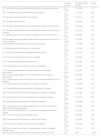
Results of the quantitative analysisPerceptions questionnaireTable 1 shows the mean scores of students from the three years together according to the type of patient. Supplementary Tables A1, A2, and A3 show the mean scores for each course separately (4th, 5th, and 6th year, respectively). Supplementary Table A4 shows the mean score on each question from the teacher and supplementary Table A5 from the external observer.
Questionnaire on perceptions from students from all years (4th, 5th, and 6th years).
| Real pat. (n = 54) | Standardized pat. (n = 53) | p value | |
|---|---|---|---|
| Q1. The briefing helped me understand what the scenario was going to consist of. | 3.6 (0.56) | 3.7 (0.65) | 0.17 |
| Q2. The authenticity of the environment was very well done. | 3.7 (0.62) | 3.7 (0.55) | 0.55 |
| Q3. The patient’s authenticity was very well done. | 3.9 (0.38) | 3.9 (0.41) | 0.67 |
| Q4. The patient got into the role. | 3.9 (0.27) | 3.9 (0.37) | 0.56 |
| Q5. The patient reported credible symptoms related to his/her clinical condition. | 3.9 (0.35) | 3.9 (0.28) | 0.53 |
| Q6. The patient spontaneously and fluently listed the elements of his/her clinical condition. | 3.4 (0.77) | 3.5 (0.74) | 0.41 |
| Q7. The patient used colloquial phrases to describe his/her clinical condition. | 3.7 (0.50) | 3.6 (0.67) | 0.79 |
| Q8. The patient portrayed authentic moods without overacting or falling short of a realistic portrayal. | 3.8 (0.48) | 3.7 (0.54) | 0.87 |
| Q9. I felt the patient was deliberately withholding information. | 1.3 (0.71) | 1.4 (0.89) | 0.63 |
| Q10. I felt the patient was testing me or my classmate. | 1.6 (0.89) | 1.5 (0.96) | 0.74 |
| Q11. I think it is important to receive feedback from the patient. | 3.9 (0.32) | 3.9 (0.37) | 0.31 |
| Q12. The patient said relevant things in the feedback. | 3.3 (0.71) | 3.5 (0.65) | 0.15 |
| Q13. The patient gave feedback spontaneously. | 3.1 (1.02) | 3.3 (0.85) | 0.29 |
| Q14. I took the patient’s comments seriously during feedback. | 3.8 (0.57) | 3.9 (0.35) | 0.85 |
| Q15. The patient gave feedback on specific aspects on the student’s performance. | 3.2 (0.91) | 3.6 (0.68) | 0.07 |
| Q16. The patient gave feedback on how he/she felt about the student’s performance. | 3.7 (0.65) | 3.9 (0.35) | 0.15 |
| Q17. The patient gave constructive criticism on the student’s performance in the feedback. | 3.1 (0.86) | 3.1 (0.94) | 0.71 |
| Q18. I learned about medical aspects of the disease in question. | 3.5 (0.70) | 3.7 (0.63) | 0.22 |
| Q19. I learned pathophysiological aspects of the disease in question. | 3.1 (0.98) | 2.9 (0.99) | 0.77 |
| Q20. I learned about the risk factors and triggers for the disease in question. | 3.2 (0.96) | 3.3 (0.96) | 0.45 |
| Q21. I learned about the signs and symptoms of the disease in question. | 3.6 (0.66) | 3.6 (0.77) | 0.56 |
| Q22. I learned about the treatment of the disease in question. | 3.3 (0.89) | 3.5 (0.84) | 0.21 |
| Q23. The activity as a whole made it possible for me to clearly understand a patient with the disease in question. | 3.3 (0.85) | 3.6 (0.54) | 0.23 |
| Q24. This workshop was DIFFICULT for the level of knowledge I have at the moment. | 1.9 (0.76) | 1.9 (0.94) | 0.66 |
| Q25. This workshop had a positive impact on me. | 3.6 (0.62) | 3.7 (0.56) | 0.55 |
| Q26. This workshop has motivated me to study more in depth. | 3.5 (0.64) | 3.6 (0.65) | 0.35 |
| Q27. This workshop helped me in my training as a physician. | 3.8 (0.48) | 3.8 (0.46) | 0.61 |
| Q28. Rate this activity overall from 1 (lowest possible rating) to 10 (highest possible rating). | 8.7 (1.27) | 9.0 (1.01) | 0.21 |
| Q29. The type of patient in the scenario was guessed correctly. (Yes, %). | 72.2 | 28.3 | <0.001 |
Mean (standard deviation); p value indicating significance <0.05.
Q: Question. Likert Scale: 1 = “Strongly disagree;” 2 = “Somewhat disagree;” 3 = “Somewhat agree;” 4 = “Strongly agree.”.
The questions concerning the realism of the scenario (questions 2, 3, 4, and 5) earned high marks (≥3.5/4) from students in all years (Table 1, supplementary Tables A1, A2, and A3) as well as from the teachers in charge of the workshop (Supplementary Table A4) and the external observer (Supplementary Table A5). The questions on the activity’s impact on the student and his or her motivation (questions 11, 18, 19, 21, 27) also earned very high scores in all years (≥3.5/4) and were somewhat higher among 6th year students (Supplementary Table A3).
SPs was rated higher than RPs on several aspects related to feedback during debriefing, although the results were only marginally significant. Students who completed the scenario with SPs thought they were given more feedback on specific aspects of the performance than those who completed the scenario with RPs (question 15, Table 1) (p = 0.07). The feedback from the SP was more spontaneous for 4th year students (p = 0.06) (question 13, Supplementary Table A1) and included relevant aspects for 6th year students (p = 0.07) (question 12, Supplementary Table A3). Fifth year students perceived that the RP hid information from them (p = 0.06) (question 9, Supplementary Table A2) and this same perception was expressed by the teacher in charge of the 5th year workshop (question 7, Supplementary Table A3) as he or she noted that the RP tested the students more (p = 0.08). No significant differences were found in the remaining questions regarding patient performance (questions 6–9), the realism of the scenario (questions 2–5), and learning and motivation (questions 18–27).
When asked what type of patient they thought had participated in their workshop, significantly fewer were correct (p < 0.001) in the group of students who participated in a workshop with SPs (Table 1). In the analysis stratified by year, these differences were also observed in 5th year (Supplementary Table A2) and 6th year students (Supplementary Table A3). The external observer was correct as to the type of patient in all three years (Supplementary Table A5).
The mean score for the activity, taking into account the responses of all year groups, was 8.7 for the scenarios with RPs and 9 for the scenarios with SPs (Table 1). Students rated all scenarios very positively, with the lowest score being 8.4 and the highest score being 9.3. All groups rated the workshop with SPs somewhat higher, but no significant differences were found in any year. Stratifying by years, 6th year students gave a higher mean rating than lower years did (Supplementary Table A3). On the part of the teachers, the teacher in charge of the 4th year group gave a higher score than teachers from other years, with no differences between types of patients (Supplementary Table A4). The external observer rated the scenarios with SPs better, but there were no significant differences (Supplementary Table A5).
The mean grade point average of the students who participated in scenarios with RPs and SPs were not significantly different in any year separately or in the sample as a whole (p = 0.658). The mean score on the knowledge questionnaire after the workshops showed no differences according to patient type in any year (Table 2). Fifth year students reported learning more about the treatment of ulcerative colitis (p = 0.08) and better understanding a patient with ulcerative colitis (p = 0.05) in the workshop with SPs (questions 22 and 23, Supplementary Table A2). This same perception was expressed by the teacher in charge of the workshop, who indicated that the SP feedback was more constructive (p = 0.08) (Supplementary Table A4).
Mean score of the questionnaire on students’ knowledge.
| Students (n = 92) | Real patient | Standardized patient | p value |
|---|---|---|---|
| 4th year students | 6.1 (0.92) (n = 20) | 6.5 (1.28) (n = 19) | 0.42 |
| 5th year students | 6.2 (1.03) (n = 9) | 6.5 (1.00) (n = 12) | 0.46 |
| 6th year students | 7.5 (1.05) (n = 13) | 7.2 (0.69) (n = 19) | 0.11 |
| All students | 6.6 (1.16) (n = 42) | 6.8 (1.04) (n = 50) | 0.22 |
Mean (standard deviation); p value indicating significance <0.05.
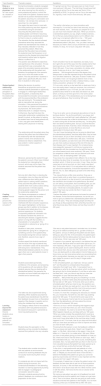
The four main themes that emerged from the analysis were: (1) positioning as a student or as a physician: where do I position myself, as a student or as a physician?; (2) student/patient relationship: how does the perception of the patient type affect the relationship established?; (3) creating realism: how do students perceive the realism of simulation?; and (4) learning beyond the classroom: how do students value practical learning with patients in simulations? Table 3 shows the themes, quotations, and a thematic analysis.
Thematic analysis on the participation of real versus standardized patients in clinical scenarios in the simulation center by students in upper years of the undergraduate medical degree (4th year – 6th year).
| Topic/Question | Thematic analysis | Quotations |
|---|---|---|
| Role as a student or as a physician How do I see myself, as a student or a physician? | During the simulation, students navigated between a more student-centered position and, when learning from this activity, a more professional position in which the focus shifts to the patient. Students have to decide how to position themselves before the patient: assuming it is a simulation and therefore, ‘I do not take it too seriously,’ or assuming it is a real patient. | “I’m going to act as if he or she were real, so I took it much more seriously” (6th year). “The first thing I thought was that I am going to act as if he or she were real; that is, if the probability is 50/50, I’m going to act as if he or she were real. So, logically, I took it much more seriously” (6th year). |
| One aspect that went hand-in-hand with this initial positioning was their degree of commitment during the simulation. Assuming that the patient was real entailed greater commitment. Assuming that the patient was standardized allowed for them to relax to a certain extent. | “The reality is that when you have simulations with mannequins, it’s not that you take it less seriously, but you are more relaxed, more… obviously you prepare for it, but you are much more relaxed” (5th year). “When you know it’s a standardized patient, you say, alright, multiple sclerosis… It’s not that you lack professionalism, but it’s different, like what I say is not going to affect him or her…" (5th year). | |
| The relaxation that the students allowed themselves when they assumed the patient was standardized was indeed, as they indicated, reflected in how they perceived the problem. When they believed that the patient was simulated, the students know that the person is not experiencing the disease being described and therefore neither feels its negative effects or suffers from it. | “You don’t care as much if you make a mistake if it’s a standardized patient” (6th year). “Yes, you take it seriously because you want to learn, but you know that if you make a mistake, it’s okay, it’s not such a big deal” (4th year). | |
| This position also affected the objectives and significance of the simulation. If it was assumed that it was a real patient, the goals of the simulation became secondary to the relationship with the patient and, therefore, the protagonist of the scenario was not so much the student as the patient. This was perceived in students in upper years, specifically 6th year, more than in students in other years. | “Each simulation has its own objectives, but really, if you don’t get to the end of the case, from the outside and for their learning and ours, I don’t think it was the most important thing” (6th year). “If you have a simulation of a stroke, what doctor X asks you to do is, ‘don’t lower your blood pressure…’ But throughout the rest of the degree, they always teach us that the important thing for the patient is that he or she feels listened to.” (6th year) “It doesn’t matter if it’s simulated or real. I am not going to believe more or less. What you have to learn is to take a medical history, a case history, prevention, whatever it is” (4th year). | |
| Student/patient relationship How does the perception of the patient affect the relationship established? | Making the decision to position themselves as physicians and not just medical students presented an opportunity to engage in a meaningful relationship with the patient, a relationship that transcended the simulation and connected with the essence/identity of the profession they are training for. The students were able to internalize that, during the simulation, if they perceived the patient in front of them as a patient and themselves as physicians, the doctor-patient relationship took on a deeper meaning. | “If it’s an actor, what he or she feels falls on deaf ears; that is, he or she really doesn’t need you anymore, he or she won’t even pay attention to you. If it’s real, you ask a lot more questions about what he or she does and doesn’t do, with whom, so that you can then give him or her some useful advice” (6th year). “If it’s standardized, you’re not doing them any good whatsoever, they’re working” (6th year). |
| Furthermore, they feel that when this meaningful relationship is established, the benefit is mutual, as the patient is helping the student learn how to treat patients and, in turn, may gain some benefit from dealing with a physician-in-training. | “If you’re an actor, you’re not going to give advice on how to be future doctors. You do this and that’s it, you leave, but I don’t know, you could tell that it really affected her” (6th year). “I think that she was also a little bit excited about it. An actor is used to doing this all the time and they say, ‘I’m doing this, then next week something else.’ But you could tell that she was excited to be there. And then, when it finished, she told us to be good doctors, to know that this is very much appreciated in the day-to-day” (6th year). | |
| The relationship with the patient when they believed the patient was real differed from the relationship with the standardized patient in terms of the emotional and professional distance established. This was evident in certain aspects of communication. | “You don’t have the feeling that you’re going to offend them (the standardized patient), because deep down, they’re there for that reason, for you to learn and they count on that, and with a real patient it’s another story” (6th year). “I think that with the real patient, you take more care of the little details, you are more cautious, because at the end of the day it’s their disease and it’s very important. It’s not about being more respectful, because it’s not that you’re going to be disrespectful with the simulated one, but with the real one you move forward much more cautiously” (5th year) “I think you empathize a little bit more and you become a bit more cautious, ‘let’s do everything better’” (5th year). | |
| Moreover, perceiving this realism through the patients’ account of their lives inhibited the students from interrupting their account, which was not the case if the students assumed that the patient was simulated. | “If you know it’s a real patient, that’s different. He or she may be telling me about how, for example, his son died in a traffic accident, which, if I think he’s an actor, I’d say: ‘Okay, but you came here to look at your foot, so I don’t really care about that.’ On the other hand, if it’s a real patient who is talking to you about this experience, it would be impossible for me to tell him, ‘No, no, wait, let's go back to the other thing’ (6th year). | |
| Not only did it affect them in directing the conversation more, but they also felt there was a difference when talking about certain topics or asking certain questions. If they assumed the patient was real, students were more cautious about asking about personal or intimate aspects, showing greater respect for the person and the relationship established. | “Yes, issues that are a little more sensitive. Drug use or sexual habits, with an actor there’s no problem because in the end, you know it’s on the list and it’s just another thing on the checklist to be included in the performance. But when you are asking a real patient, that’s something else; you are much more self-conscious, you give it more thought” (6th year). “I think that in simulated patients, it’s easier to ask them if they have any suicide risk than if it were a real patient” (5th year). | |
| Creating realism How do students perceive the realism of the simulation? | This theme encompasses a number of aspects of the patient that students assumed were typical of real or standardized patients and how that interfered with their simulation experience. One aspect highlighted in all the focus groups was that in addition to the disease, the patient also talked about his or her personal experience. For students, incorporating additional information into the disease narrative that, while not describing the disease, suggests that the person is living with that condition, is characteristic of a real patient. This characteristic is referred to as “going off on a tangent.” | “I believe the patient is real because he knows the context of his disease, he has first-hand experience, he can tell you more or give you details that a standardized patient does not know” (5th year). “They are everyday people and they tell you things as they experience them, what they have felt, not what they know about their illness, but how they live with it” (6th year). |
| Students in later years, moreover, associated this “going off on a tangent” as something common in the patients they have treated during their clinical rotations and, therefore, assume it as a sign of realism. | “She was a real patient because it reminded me a lot of when we go to do rotations and they tell us, ‘go take a history on this patient,’ and you’re talking to the patient and she starts telling you about her life. In the simulation, the patient spent almost half of the time talking about her day-to-day life. And in that sense, I think it was very real” (6th year). | |
| Another aspect that students mentioned was the issue of the age of patients they see in simulation cases and its association with being real or standardized. They differentiated between patients of a similar age to their own or adult patients closer in age to their parents. | “If a person of our parents’ age comes in, we believe they are more sincere. Because when an adult looks right at you, it’s more imposing” (4th year). “A guy your age in the end is just like the people you’re used to dealing with. And it’s not that you’re above them, but you are at the same level” (4th year). “If you are dealing with an older patient, it kind of helps you to focus more, you are more serious when you are working than with a young patient, because you say well, he is my same age, maybe he comes in and it’s okay if I forget certain things” (4th year). | |
| Students associated spontaneity, confidence in the answers, and answering all the questions with real patients. When students assume they are dealing with a standardized patient, they perceive the simulation as more limited and subject to a checklist and a learned script. | “In the simulated patient, you might ask, ‘Did you used to ski?’ and the patient is confused about the possible implication that might have” (4th). “A real patient has no guidelines on what to do, they are natural, which is what we are going to find in clinical practice; it’s not like an actor who has been told, ‘Look, you have to say that you have low hemoglobin on your last blood test, that you have whatever…’ Many times they give you everything in a more guided way. It seems it takes away that spontaneity that real life has later on” (6th year). “In the end, when you’re with a simulated patient, what you have to say, the questions you have to ask, and then you really go for it, you’re like I have to tell him about this and this and this. And in the end you see it as like the checklist that the teacher has” (4th year). | |
| The latter was also experienced during debriefing. When students assumed that the patient was standardized, they felt that their feedback focused more on theoretical aspects of the disease in question and on listing the mistakes they had made. | “In actors, it’s more like a shopping list, because you missed this, you missed this. Not with her, she didn’t say anything about that” (6th year). “If I found that the actor says to the doctor, ‘Yes, because I had to help him so he would tell me this’ then the debriefing is a bit more about the clinical objective of the disease” (6th year). | |
| Learning beyond the classroom How do students value hands-on learning with patients in a simulated environment? | This category reflects how for the students, simulations with real patients transcend the classroom because it is perceived as more long-lasting learning. | “I think it’s an hour in which everything that happens stays with you a lot more than when you are in front of books, notes, or whatever. You learn a lot and for the long-term. What happens impacts you and stays with you” (5th year). “When you really consider the possibility that it could be a real patient. I mean, you have no choice but to think, ‘Really, how could I have done better for the next time when it really happens to me?’ You know, how do you stop and think about what you have done and what you have to improve and what you have to learn” (6th year). |
| Students base this perception on the debriefing, as they consider the feedback received from patients to be very valuable. | “Knowing that other person is real, the feedback is different. Then you leave and really think, ‘Great! I can’t forget this again,’ or ‘My God, I did so bad on this aspect, I have to do better on it, I have to fix it no matter what.’ (6th year) “When you have a real patient giving you their feedback on how you did, it feels more real to me than when an actor says, ‘Well, I felt comfortable with you.’ Yes, but of course, everything was simulated. Also, if a real patient tells you that, it’s like it’s a lot more valuable because that patient has really opened up to you, not just told you a story that he knew” (6th year). | |
| The students also consider simulations with real patients as environments conducive to receiving feedback they do not usually receive during their clinical rotations. | “In the clinic, in real practice with real patients or in the hospital, you don’t often hear a patient say, ‘Hey, you did well,’ or ‘Maybe you should have done it more like this.’ I believe the feedback the patient can give you cannot be given by anyone else and I think it is very important and this way you don’t do it again” (4th year). | |
| For students who did not interact with the patient during the scenario, this contextualized feedback in the debriefing resulted in a learning opportunity by being able to engage in a pedagogical conversation about the case. | “For example, it helped me a lot when the patient came in for feedback and we were able to ask him all those questions because, of course, in the end there was only one person who went in to be face-to-face with him. When he then came in with the others, I fell more into the role of a doctor at the end” (4th year). | |
| Ultimately, students perceive that the patient’s feedback can contribute to their preparation for the future. | “By having a real patient, we get a lot of feedback from both sides (the doctor and the patient) and it helps us to get more into it. Then in the future, when we are going to have similar situations and treat real patients in the hospital, it’s a lot more imposing unless you’ve started little by little” (4th year). |
This interventional study with 4th, 5th, and 6th year undergraduate medical students found that participation in simulated scenarios with patients, whether real or standardized, is a useful tool in medical training. This result is consistent with previously published literature.8–11 This study adds to the existing evidence, finding no significant differences in perceptions or in the acquisition of learning objectives between students who were randomized into the RP or SP group.
Overall, no significant differences were found between RPs or SPs from the perspective of students, the teacher, or the external observer. Other unblinded studies found differences in terms of authenticity, comfort, friendliness, learning, and overall satisfaction in favor of RPs on the part of the students, but not the teacher.11–13
It should be noted that differences were found between the two groups in the percentage of correct answers according to patient type. Students were unable to distinguish the SP, identifying him or her as a RP, which suggests a high degree of authenticity of the SP. We believe that the lack of significant differences between the two groups regarding scenario authenticity can be explained, at least in part, by the study’s blinded design, which prevented students’ perceptions from being biased by their prior ideas about SPs. This could explain why, in unblinded studies,11–13 differences were indeed found between the two types of patients regarding authenticity. Although no other blinded studies with medical students were found, several authors reflected that when introducing “unannounced SPs” in real consultations to evaluate physicians, they were mistaken for RPs.14–16
The fact that 4th year students reported feeling “more tested” with the SPs’ attitude could be due to these students’ lack of experience with RPs. Indeed, some studies suggest that previous experience with RPs increase the confidence and naturalness with which students later confront simulated scenarios.17
Regarding the feedback, these results are consistent with previous evidence5,11,12,18 since, although students perceive the SPs as “more spontaneous and relevant,” the differences are not significant. These results may be related to the prior training SPs receive on the disease they portrayed and the way to “critique” the student’s performance.
The excellent ratings on questions regarding learning and motivation (both for students who participated in the scenario and for those viewing the scenario in an adjacent room) suggest that the scenarios were valid and properly designed. In line with this finding, the mean score of the activity was very high among all years, indicating that students value the inclusion of clinical scenarios in their education very positively. The score was highest among 6th year students, followed by 5th and 4th year students, indicating that students in later years valued participation in this type of activities more highly. In accordance with these opinions, in terms of gaining knowledge (knowledge questionnaire), no significant differences were found between both groups, indicating that students were able to learn and apply new concepts in a similar manner. Other studies have found similar results on assessing the validity of Objective Structured Clinical Examinations (OSCEs).19
In general, no significant differences were found between the groups in the questionnaires completed by the teachers or the external observer, which is consistent with previous works.13 Differences were observed with respect to feedback, in line with what was reported by the students.
In regard to qualitative results, it was noted that the attitude with which the students faced the scenario differed depending on whether they thought it was a RP or a SP. If they thought they were before a RP, they were more involved and felt obliged to prepare before the scenario, as other authors have reported.11,12 Fourth year students reported that the simulation was a good tool for learning, as it helped them retain the knowledge acquired better and longer. They also found it less important to know in advance which type of patient (real or standardized) they were dealing with. This could be motivated by the fact that they had had little previous experience with RPs and having patients, whether real or standardized, is a big advance for them.
Regarding the impact on the doctor-patient relationship, the ideas collected were strikingly different between 4th and 6th year students. For 4th year students, the patient is “just another learning tool” with whom they establish a unilateral relationship in which the fulfillment of learning objectives takes precedence. They perceive that, as 4th year students, they have little to contribute to the patient, who is not influenced by what they say or do. In contrast to this view, 6th year students perceive the patient as a person with whom they establish a reciprocal relationship. They believe they can contribute and help them improve their lives. This perception reflects how 6th year students, at the end of their university studies, have already begun to put together the basic elements of a medical identity as opposed to 4th year students, who are still very much focused on purely academic learning.
Regarding the realism of the scenarios, the students thought that the SP followed a predefined script, as opposed to the conception they have of the RP for whom, according to the students, personal experiences and a more complete knowledge of their disease come into play. A priori, the students thought that RPs are more authentic. However, the students who participated in the scenarios with SPs mostly thought that they were RPs and the results of the perceptions questionnaire showed no differences. In the authors’ opinion, telling students that the patient in the simulated scenario in which they are going to participate may be real or standardized could increase their involvement.
Students placed great value on patient feedback during the debriefing, regardless of patient type and the student’s year. They perceived it as a useful tool because it showed the patient’s own view, something that is not usually available in clinical practice. In addition, the patient can express whether he/she felt listened to and well cared for (emotional feedback), a fact that several students considered as important or more important than the knowledge acquired. This finding corroborates the results on feedback from the perceptions questionnaire, where a favorable tendency toward SPs was even observed.
This study’s qualitative analysis shows that the students’ attitudes evolved throughout their undergraduate studies. They went from perceiving a simulation as an advanced teaching tool to conceiving of it an experience that focused on care: from the patient who has a disease to the patient living with a disease and from a knowledge-centered experience to a person-centered experience.
Despite these findings, this study has some limitations. Of the 120 students planned to be included in this study, 107 ultimately participated and 50% of them attended the focus group. In addition, in the 6th year group, there was only one focus group compared to three in the 4th and 5th year groups, respectively. Another limitation was the number of total workshops (12) and patients (6), which were too few to draw definitive conclusions.
As strengths, this study adds to the existing evidence with a larger sample and greater diversity in the years participating. In addition, three sources of information were used: the teacher in charge of the subject, the students, and the external observer. Furthermore, the intervention was double-blind. Finally, a dual analysis (quantitative and qualitative) was conducted, which allows for a more comprehensive analysis of the scenarios’ impact on the students while also serving to assess the strength of the results.
ConclusionIn this study, no significant differences were found between the participation of RPs and SPs in simulation scenarios in undergraduate medical education. Therefore, considering the difficulties involved in having RPs with various diseases and different levels of severity, the use of SPs is a valid option for undergraduate students’ education. The qualitative results show a clear evolution in the role simulations play for medical students from a “student-centered simulation” to a “patient-centered simulation.”
FundingNo funding was received for this study.
The authors declare that they do not have any conflicts of interest.
We are grateful for the collaboration of all students who participated in the study as well as both the real and standardized patients.
The following are Supplementary data to this article: