

Patients who remain hospitalized due to the absence of adequate social support for discharge represent a growing challenge in an aging society where traditional family care networks are increasingly weakened.
MethodsWe conducted a study in an acute care hospital in southern Spain, focusing on inpatients referred to the Social Work Department in whom social problems were identified as barriers to discharge (SPD). Data were reviewed from 2006 onwards, as well as across two 24-month periods: before and after the COVID-19 pandemic.
Results2288 discharges with SPD were analyzed. From 2006 to 2024, the number of beds occupied by patients with SPD increased by an average of 0.62 beds per day each year. The rise was particularly marked in 2022 and 2024, when 1.3% of all hospital discharges were delayed due to SPD, equivalent to 11 beds occupied daily. Internal Medicine was the specialty with the highest proportion of patients with SPD: 4%.
ConclusionsHospital stays prolonged by social problems represent a substantial burden and show a clear upward trend. The underlying causes are multifactorial, mainly related to social circumstances and the clinical complexity of patients.
Los pacientes que permanecen hospitalizados por no disponer de un entorno social adecuado para el alta constituyen un problema creciente en una sociedad en progresivo envejecimiento y cuyas redes de cuidados dentro de la familia se han debilitado.
Material y métodosEstudio realizado en un hospital de agudos del sur de España sobre pacientes hospitalizados con interconsulta a Trabajo Social en la que se especificó que existían problemas sociales para el alta (PSA). Se analizó el histórico desde 2006, además de dos periodos de 24 meses, anterior y posterior a la pandemia COVID-19.
ResultadosSe analizaron 2288 altas con PSA. Entre 2006 y 2024 se produjo un aumento medio anual de 0,62 camas por día ocupadas por pacientes con PSA, especialmente en 2022 y 2024, cuando el 1,3% de las altas hospitalarias se vieron retrasadas por PSA, lo que equivale a 11 camas diarias ocupadas. Medicina Interna fue la especialidad con más pacientes con PSA: 4%.
ConclusionesLas estancias debidas a PSA suponen un volumen importante y muestran una tendencia ascendente. Las causas son multifactoriales e incluyen principalmente circunstancias sociales y de complejidad clínica de los pacientes.
Article
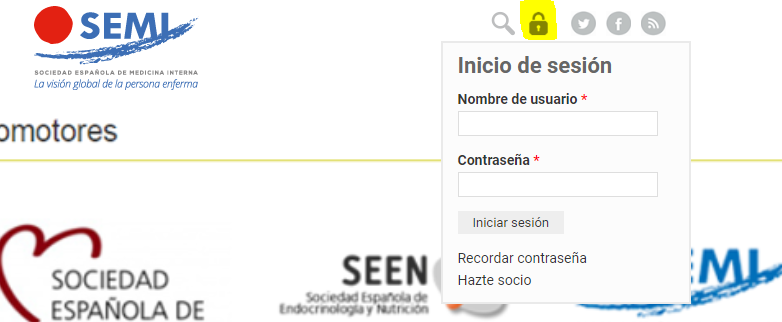
Diríjase desde aquí a la web de la >>>FESEMI<<< e inicie sesión mediante el formulario que se encuentra en la barra superior, pulsando sobre el candado.
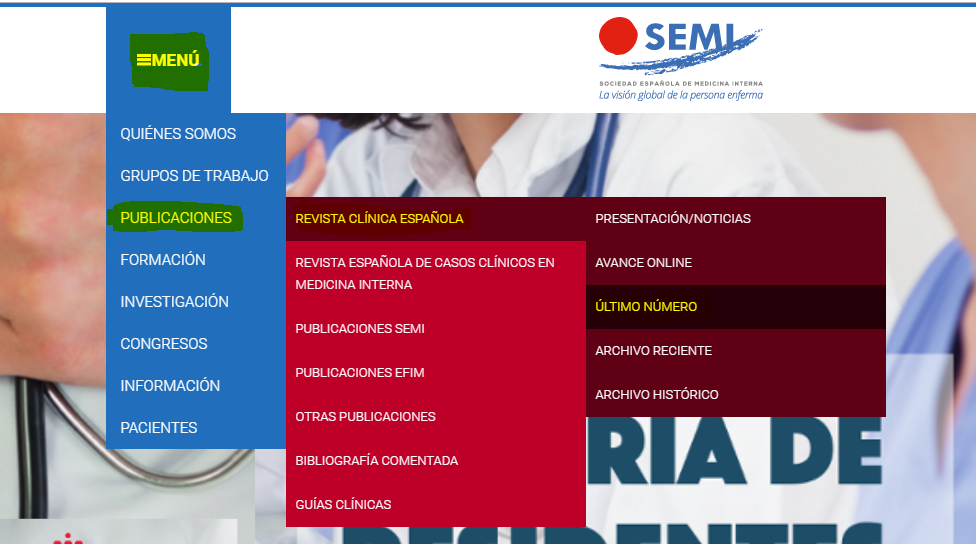
Una vez autentificado, en la misma web de FESEMI, en el menú superior, elija la opción deseada.
>>>FESEMI<<<