Suggestions
Idioma
Guide for authors
Searcher
Journal Information
Vol. 226. Issue 2.
(February 2026)
Cite
Cite
Share
Download PDF
More article options
Visits
2304
Vol. 226. Issue 2.
(February 2026)
Original

Tratamiento diurético combinado en insuficiencia cardiaca aguda: resultados del registro RICA-2

Combined diuretic treatment in acute heart failure: insights from RICA-2 registry
Visits
2304
J. Casadoa,b,
Corresponding author
casadocerrada@telefonica.net

Autor para correspondencia.
, D. Abada,b, G. Ropero-Luisc, M. Francisco Dávilad, A. Muelae, A. Bustos-Merlof, J.C. Arévalo-Loridog, M. Sánchez-Martelesh, J. Pérez-Silvestrei, J.C. Trullasj,k, en representación de los investigadores del registro RICA-2
a Servicio de Medicina Interna, Hospital Universitario de Getafe, Getafe, Madrid, España
b Departamento de Medicina, Facultad de Medicina, Salud y Deportes, Universidad Europea de Madrid, Madrid, España
c Servicio de Medicina Interna, Hospital de la Serranía de Ronda, Ronda, Málaga, España
d Servicio de Medicina Interna, Hospital Universitario Nuestra Señora de Candelaria, Santa Cruz de Tenerife, España
e Servicio de Medicina Interna, Complejo Asistencial Universitario de León, León, España
f Servicio de Medicina Interna, Hospital Universitario Virgen de las Nieves, Granada, España
g Servicio Extremeño de Salud, FUNDESALUD, Villanueva de la Serena, Badajoz, España
h Servicio de Medicina Interna, Hospital Clínico Universitario Lozano Blesa, Instituto de Investigación Sanitaria de Aragón (IISAragón), Zaragoza, España
i Servicio de Medicina Interna, Consorcio Hospital General Universitario de Valencia, Valencia, España
j Servicio de Medicina Interna, Hospital d’Olot i Comarcal de La Garrotxa, Olot, Girona, España
k Tissue Repair and Regeneration Laboratory (TR2Lab), Institut de Recerca i Innovació en Ciències de la Vida i de La Salut a La Catalunya Central (IrisCC), Facultat de Medicina, UVic-UCC, Vic, Barcelona, España
Ver más
This item has received
Article information
Abstract
Full Text
Bibliography
Download PDF
Statistics
Resumen
Objetivo

Describir la estrategia diurética utilizada en pacientes hospitalizados por insuficiencia cardiaca aguda (ICA), así como identificar los perfiles clínicos de estos pacientes según la estrategia diurética recibida.

Material y métodos

Estudio observacional multicéntrico de pacientes hospitalizados por ICA en servicios de Medicina Interna e incluidos en el Registro de Insuficiencia Cardiaca (RICA-2). Los pacientes fueron categorizados en tres grupos en función del tratamiento diurético recibido: furosemida intravenosa (i.v.) sola, furosemida i.v. más diuréticos tiazídicos (DT) y furosemida i.v. más acetazolamida (ACZ).

Resultados

Se analizaron 588 pacientes (mediana de edad 84 [77-88] años, 51,2% mujeres). El 78% recibió furosemida i.v. sola y el 22%, tratamiento diurético combinado (17% con DT y 5% con ACZ). Los pacientes que recibieron tratamiento diurético combinado tenían más comorbilidades (diabetes, obesidad, enfermedad renal crónica y deterioro de función renal al ingreso), peor clase funcional de la NYHA, marcadores clínicos y bioquímicos de congestión más elevados y recibían con más frecuencia diuréticos de asa en domicilio. No se encontraron diferencias en los días de estancia hospitalaria según la estrategia diurética utilizada. La combinación diurética mostró una mayor pérdida de peso durante el ingreso hospitalario (3kg en el grupo con DT y 2,75kg con ACZ) frente a la terapia con solo furosemida i.v. (2kg), (p=0,005).

Conclusiones

La estrategia diurética más utilizada en los pacientes ingresados por ICA en Medicina Interna incluidos en el registro RICA-2 es la furosemida i.v. sola. Se utiliza con mayor frecuencia la combinación de diuréticos (especialmente con DT) en pacientes con más comorbilidades y congestión.

Palabras clave:
Insuficiencia cardiaca aguda
Registros
Furosemida
Diuréticos
Diuréticos tiazídicos
Acetazolamida
Abstract
Objective

To describe the diuretic strategy used in patients hospitalized for acute heart failure (AHF), as well as to identify the clinical profiles of these patients according to the diuretic regimen received.

Materials and methods

A multicenter observational study of patients hospitalized for AHF in Internal Medicine departments and included in the Heart Failure Registry (RICA-2). Patients were categorized into three groups based on the diuretic treatment received: intravenous (IV) furosemide alone, IV furosemide plus thiazide diuretics (TD), and IV furosemide plus acetazolamide (ACZ).

Results

A total of 588 patients were analyzed (median age 84 [77-88] years; 51.2% female). IV furosemide alone was administered in 78% of cases, while 22% received combination diuretic therapy (17% with TD and 5% with ACZ). Patients treated with combination diuretics had a higher burden of comorbidities (diabetes, obesity, chronic kidney disease, and renal function impairment at admission), worse NYHA functional class, higher clinical and biochemical markers of congestion, and were more frequently on loop diuretics prior to admission. No significant differences were found in the length of hospital stay according to the diuretic strategy used. Combination diuretic therapy was associated with greater weight loss during hospitalization (3kg in the TD group and 2.75kg in the ACZ group) compared to IV furosemide alone (2kg) (P=.005).

Conclusions

The most frequently used diuretic strategy in patients hospitalized for AHF in the Internal Medicine departments included in the RICA-2 registry is IV furosemide alone. The combination of diuretics (especially with TD) is more commonly used in patients with more comorbidities and congestion.

Keywords:
Acute heart failure
Registries
Furosemide
Diuretics
Thiazide diuretics
Acetazolamide
Graphical abstract

Article

These are the options to access the full texts of the publication Revista Clínica Española (English Edition)
Member
Si es usted socio de FESEMI siga los siguientes pasos:

Diríjase desde aquí a la web de la >>>https://www.fesemi.org/publicaciones/revista-clinica/noticias<<< e inicie sesión mediante el formulario que se encuentra en la barra superior, pulsando sobre el candado.
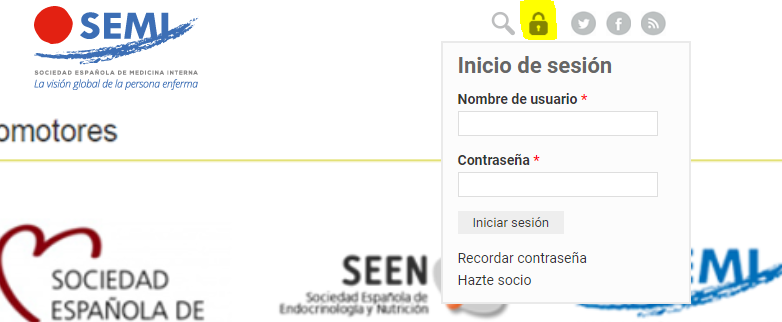
Deslice el cursor hacia abajo hasta la sección "PUBLICACIONES" y pinche en "Revista Clínica Española":

>>>https://www.fesemi.org/publicaciones/revista-clinica/noticias<<<


Subscriber
Subscriber

If you already have your login data, please click here .

If you have forgotten your password you can you can recover it by clicking here and selecting the option “I have forgotten my password”
Subscribe
Subscribe to
Revista Clínica Española (English Edition)
Purchase
Purchase article

Purchasing article the PDF version will be downloaded

Purchase now
Contact
Phone for subscriptions and reporting of errors
From Monday to Friday from 9 a.m. to 6 p.m. (GMT + 1) except for the months of July and August which will be from 9 a.m. to 3 p.m.
Calls from Spain
932 415 960
Calls from outside Spain
+34 932 415 960
Email
Bibliografía
[1]
A. Groenewegen, F.H. Rutten, A. Mosterd, A.W. Hoes.
Epidemiology of heart failure.
Eur J Heart Fail., 22 (2020), pp. 1342-1356
[2]
G. Savarese, P.M. Becher, L.H. Lund, P. Seferovic, G.M.C. Rosano, A.J.S. Coats.
Global burden of heart failure: A comprehensive and updated review of epidemiology.
Cardiovasc. Res., 118 (2023), pp. 3272-3287
[3]
J.C. Trullàs, J.I. Pérez-Calvo, A. Conde-Martel, et al.
Epidemiology of heart failure with preserved ejection fraction: Results from the RICA Registry.
Med Clin (Barc)., 157 (2021), pp. 1-9
[4]
B.A. Davison, M. Metra, S. Senger, et al.
Patient journey after admission for acute heart failure: length of stay, 30-day readmission and 90-day mortality.
Eur J Heart Fail., 18 (2016), pp. 1041-1050
[5]
L. Fernández-Gassó, L. Hernando-Arizaleta, J.A. Palomar-Rodríguez, M.V. Abellán-Pérez, A. Hernández-Vicente, D.A. Pascual-Figal.
Population-based study of first hospitalizations for heart failure and the interaction between readmissions and survival.
Rev Esp Cardiol (Engl Ed)., 72 (2019), pp. 740-748
[6]
O. Chioncel, A. Mebazaa, V.P. Harjola, et al.
Clinical phenotypes and outcome of patients hospitalized for acute heart failure: the ESC Heart Failure Long-Term Registry.
Eur J Heart Fail., 19 (2017), pp. 1242-1254
[7]
T.A. McDonagh, M. Metra, M. Adamo, et al.
2023 focused update of the 2021 ESC Guidelines for the diagnosis and treatment of acute and chronic heart failure.
Eur Heart J., 44 (2023), pp. 3627-3639
[8]
P.A. Heidenreich, B. Bozkurt, D. Aguilar, et al.
2022 AHA/ACC/HFSA Guideline for the management of heart failure: a report of the American College of Cardiology/American Heart Association Joint Committee on Clinical Practice Guidelines.
J Am Coll Cardiol., 79 (2022), pp. e263-e421
[9]
P. Llàcer, G. Romero, J.C. Trullàs, et al.
Consensus on the approach to hydrosaline overload in acute heart failure. SEMI/SEC/S.E.N. Recommendations.
Rev Esp Cardiol (Engl Ed)., 77 (2024), pp. 556-565
[10]
W. Mullens, K. Damman, V.P. Harjola, et al.
The use of diuretics in heart failure with congestion - a position statement from the Heart Failure Association of the European Society of Cardiology.
Eur J Heart Fail., 21 (2019), pp. 137-155
[11]
J.C. Trullàs, J.L. Morales-Rull, J. Casado, CLOROTIC trial investigators, et al.
Combining loop with thiazide diuretics for decompensated heart failure: the CLOROTIC trial.
Eur Heart J., 44 (2023), pp. 411-421
[12]
W. Mullens, J. Dauw, P. Martens, ADVOR Study Group, et al.
Acetazolamide in acute decompensated heart failure with volume overload.
N Engl J Med., 387 (2022), pp. 1185-1195
[13]
E. Meekers, J. Dauw, J.M. Ter Maaten, et al.
Urinary sodium analysis: the key to effective diuretic titration? European Journal of Heart Failure expert consensus document.
Eur J Heart Fail., 27 (2025), pp. 940-949
[14]
J.C. Trullàs, M.C. Moreno-García, V. Mittelbrunn-Alquézar, Investigadores del registro RICA-2, et al.
The RICA-2 registry: design and baseline characteristics of the first 1,000 patients.
Rev Clin Esp (Barc)., 224 (2024), pp. 522-533
[15]
F.I. Mahoney, D.W. Barthel.
Functional evaluation: the Barthel index.
Md State Med J., 14 (1965), pp. 61-65
[16]
E. Pfeiffer.
A short portable mental status questionnaire for the assessment of organic brain deficit in elderly patients.
J Am Geriatr Soc., 23 (1975), pp. 433-441
[17]
G. Turner, A. Clegg, British Geriatrics Society, Age UK, Royal College of General Practicioners.
Best practice guidelines for the management of frailty: a British Geriatrics Society, Age UK and Royal College of General Practitioners report.
Age Ageing., 43 (2014), pp. 744-747
[18]
M.E. Charlson, P. Pompei, K.L. Ales, C.R. MacKenzie.
A new method of classifying prognostic comorbidity in longitudinal studies: development and validation.
J. Chronic Dis., 40 (1987), pp. 373-383
[19]
A.P. Ambrosy, P.S. Pang, S. Khan, EVEREST Trial Investigators, et al.
Clinical course and predictive value of congestion during hospitalization in patients admitted for worsening signs and symptoms of heart failure with reduced ejection fraction: findings from the EVEREST trial.
Eur Heart J., 34 (2013), pp. 835-843
[20]
O. Chioncel, A. Mebazaa, A.P. Maggioni, ESC-EORP-HFA Heart Failure Long-Term Registry Investigators, et al.
Acute heart failure congestion and perfusion status-impact of the clinical classification on in-hospital and long-term outcomes; insights from the ESC-EORP-HFA Heart Failure Long-Term Registry.
Eur J Heart Fail., 21 (2019), pp. 1338-1352
[21]
A. Lala, S.E. McNulty, R.J. Mentz, et al.
Relief and recurrence of congestion during and after hospitalization for acute heart failure: insights from Diuretic Optimization Strategy Evaluation in acute decompensated heart failure (DOSE-AHF) and Cardiorenal Rescue Study in Acute Decompensated Heart Failure (CARESS-HF).
Circ Heart Fail., 8 (2015), pp. 741-748
[22]
M. Pagnesi, L. Staal, J.M. ter Maaten, et al.
Decongestion and outcomes in patients hospitalized for acute heart failure: insights from the RELAX-AHF-2 trial.
JACC Heart Fail., 13 (2025), pp. 414-429
[23]
A. Doering, C.A. Jenkins, A.B. Storrow, et al.
Markers of diuretic resistance in emergency department patients with acute heart failure.
Int J Emerg Med., 10 (2017), pp. 17
[24]
J.M. Testani, J.S. Hanberg, S. Cheng, et al.
Rapid and highly accurate prediction of poor loop diuretic natriuretic response in patients with heart failure.
Circ Heart Fail., 9 (2016), pp. e002370
[25]
J.M. Testani, B.D. McCauley, J. Chen, S.G. Coca, T.P. Cappola, S.E. Kimmel.
Clinical characteristics and outcomes of patients with improvement in renal function during the treatment of decompensated heart failure.
J Card Fail., 17 (2011), pp. 993-1000
[26]
K. Schuett, N. Marx, M. Lehrke.
The cardio-kidney patient: epidemiology, clinical characteristics and therapy.
Circ Res., 132 (2023), pp. 902-914
[27]
J.C. Trullàs, J.L. Morales-Rull, J. Casado, et al.
Combining loop and thiazide diuretics for acute heart failure across the estimated glomerular filtration rate spectrum: a post-hoc analysis of the CLOROTIC trial.
Eur J Heart Fail., 25 (2023), pp. 1784-1793
[28]
E. Meekers, J. Dauw, P. Martens, et al.
Renal function and decongestion with acetazolamide in acute decompensated heart failure: the ADVOR trial.
Eur Heart J., 44 (2023), pp. 3672-3682
[29]
W. Mullens, P.C. Schulze, J. Westphal, J. Bogoviku, J. Bauersachs.
Great debate: in patients with decompensated heart failure, acetazolamide in addition to loop diuretics is the first choice.
Eur Heart J., 44 (2023), pp. 2159-2169
[30]
A.S. Relman, A. Leaf, W.B. Schwartz.
Oral administration of a potent carbonic anhydrase inhibitor (Diamox). II. Its use as a diuretic in patients with severe congestive heart failure.
N Engl J Med., 250 (1954), pp. 800-804
[31]
J.J. Cuthbert, E. Luo, A.S.M. Ahmed, et al.
Rationale and design of the acetazolamide as a chloride sparing diuretic in patients admitted with heart failure (ADA-HF) trial.
Eur Heart J Open., 5 (2025), pp. oeaf019
Idiomas
Revista Clínica Española (English Edition)
Article options
Tools